Project Launchpad

Eradicating period poverty, one pad at a time

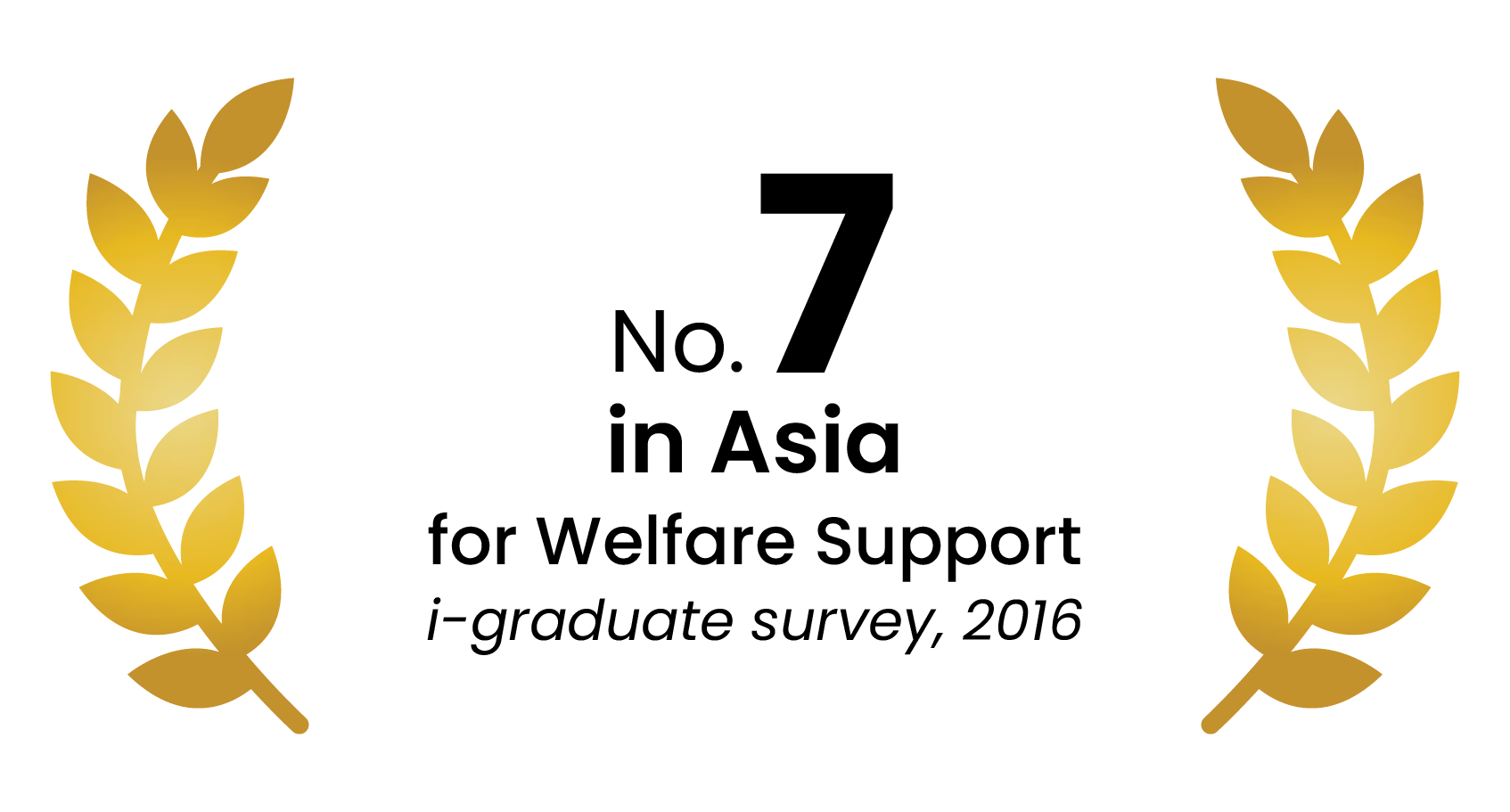
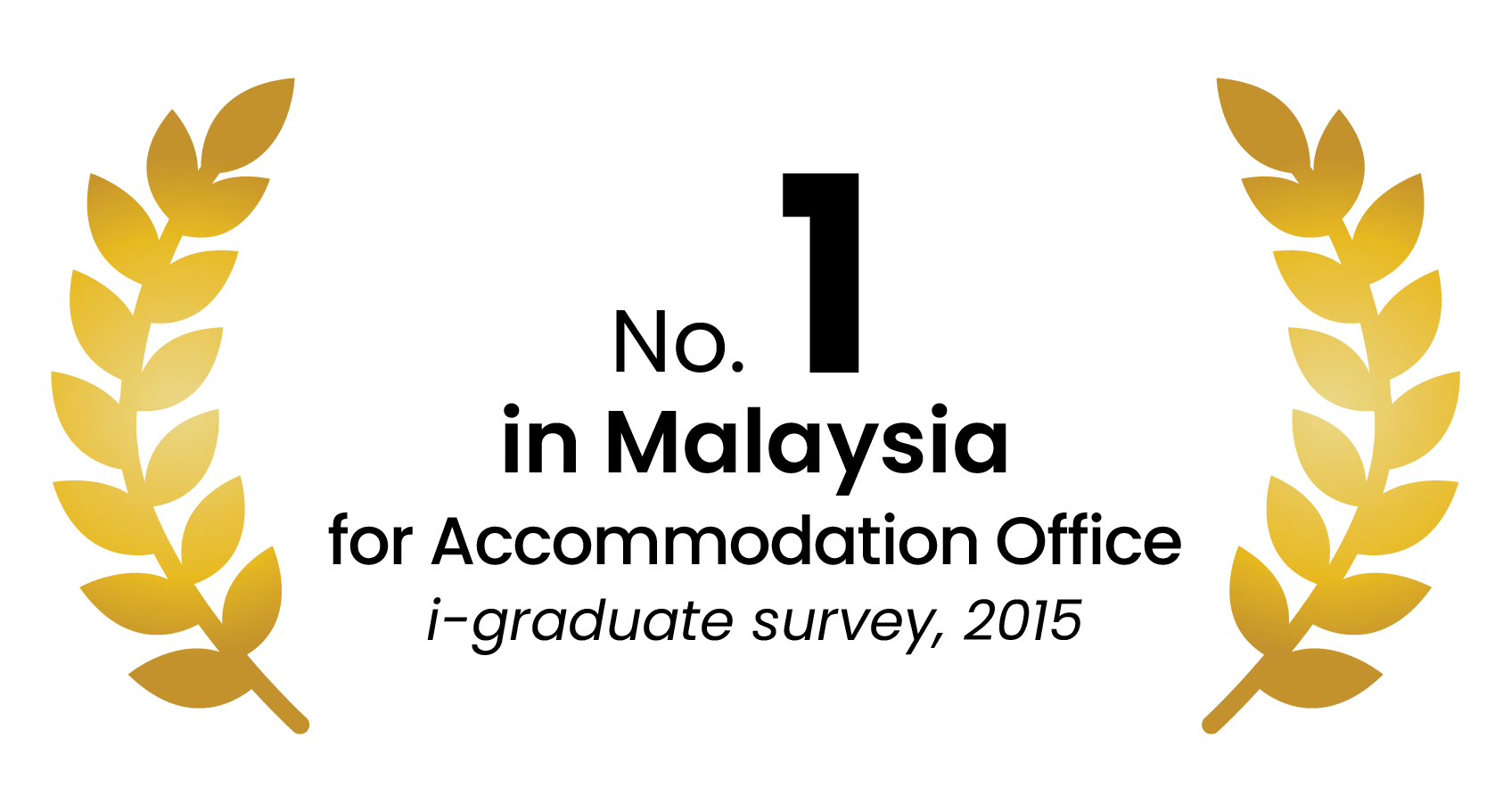
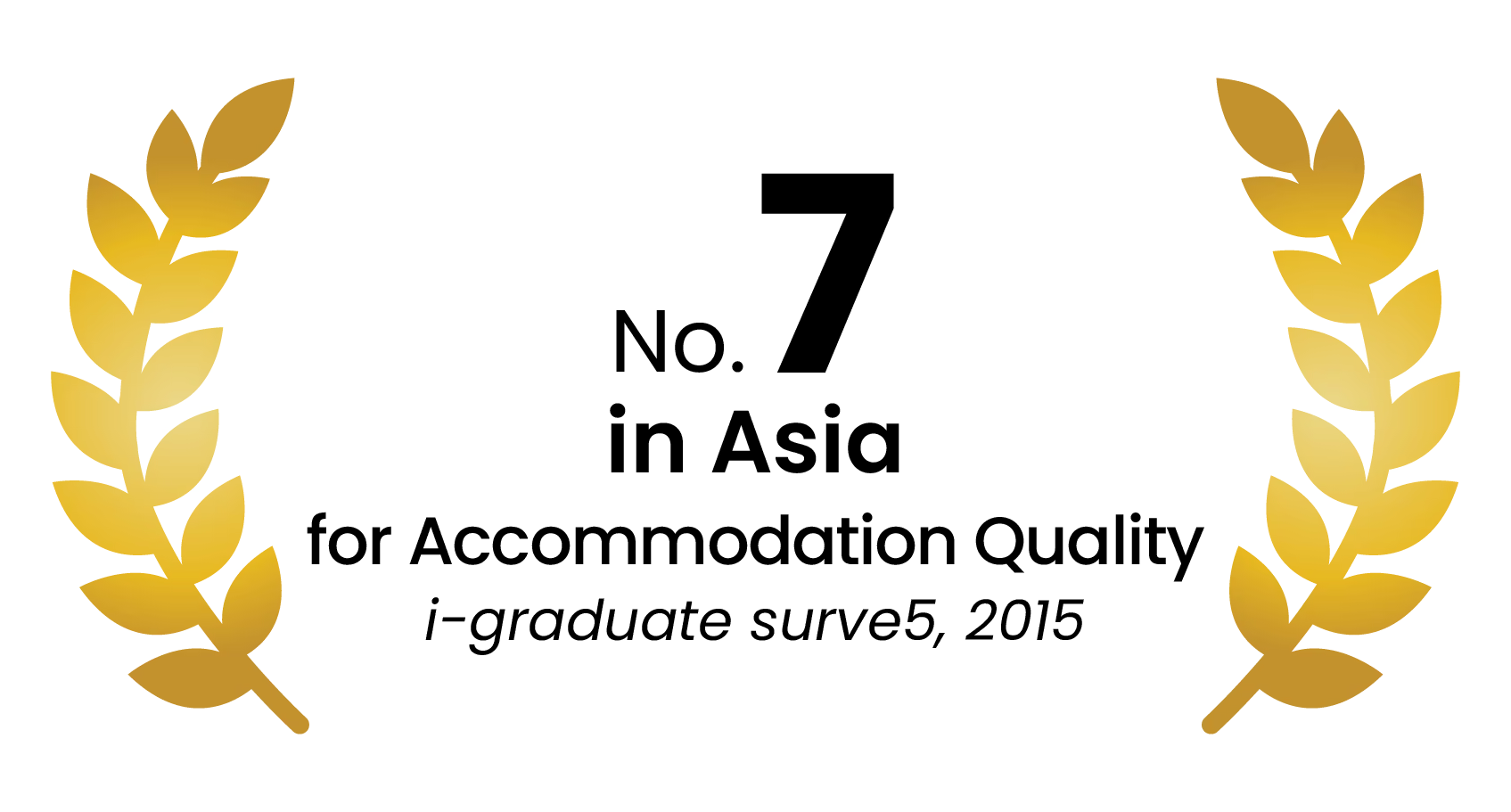
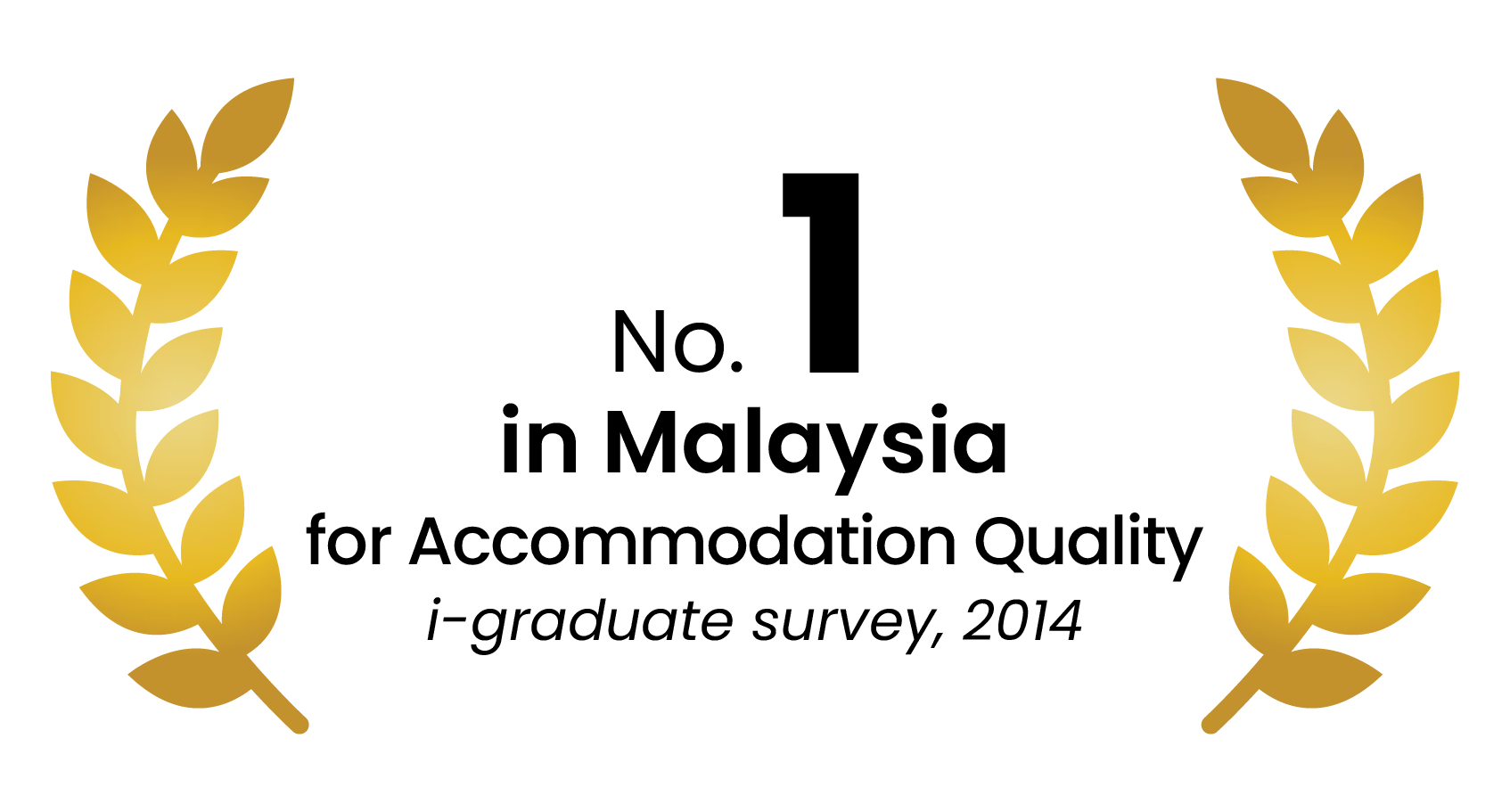
Recognised for Creating Lasting Impact

What is Launchpad about?

In collaboration with various non-governmental organizations, Taylor's Residence launched the LaunchPad Project - a student-led initiative under our structured living program. The goal: to eliminate period poverty among female refugees in Malaysia by providing access to reusable sanitary pads, along with menstrual hygiene and sex education.

Malaysia is home to approximately 170,000 refugees and asylum seekers, with women making up about 32% (over 60,000 individuals). For these communities, reusable sanitary pads offer a cost-effective and sustainable solution, helping to ease the financial burden of disposable products in already vulnerable living conditions.

In 2025, LaunchPad entered a new phase - LaunchPad 2.0. While our original mission supported Rohingya refugee women, LaunchPad 2.0 expands our impact to Orang Asli communities in Malaysia, where period poverty continues to be a silent struggle. This new phase focuses on access to menstrual hygiene, culturally sensitive education, and empowering local champions to drive long-term change. Our pilot project begins in Kampung Serendah, Ulu Selangor, with a focus on sustainable outreach, skills-building, and dignity restoration.

As UNICEF reports, "Refugee and stateless girls are especially at risk of poor menstrual hygiene due to lack of access to clean water, privacy, and sanitary products" (2022). These challenges similarly affect Orang Asli communities, making LaunchPad 2.0 a crucial extension of our mission.

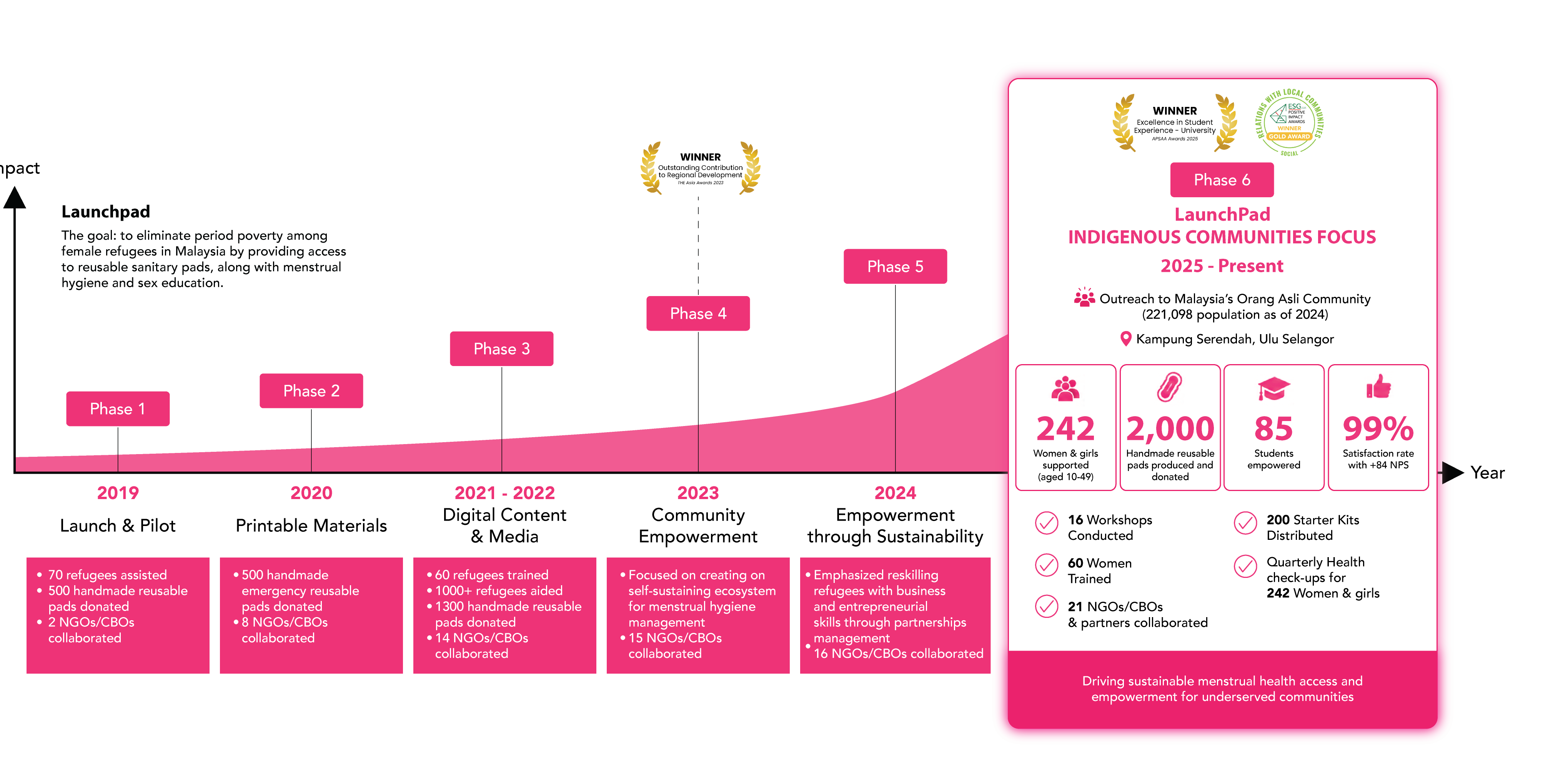
We have rolled out LaunchPad in six distinct phases, each building upon the successes and learnings of the previous stage to continuously improve and expand its impact.

Transforming Lives Through Reusable Pads & Education

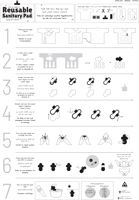
In collaboration with The Design School at Taylor's University, we developed DIY guides for reusable sanitary pads and basic sex education materials, designed for underserved communities. These resources, available in multiple languages, have been widely adopted by Rohingya refugees and are now being introduced to the Orang Asli community through LaunchPad 2.0, ensuring more women and girls have the tools and knowledge to care for their health with dignity.

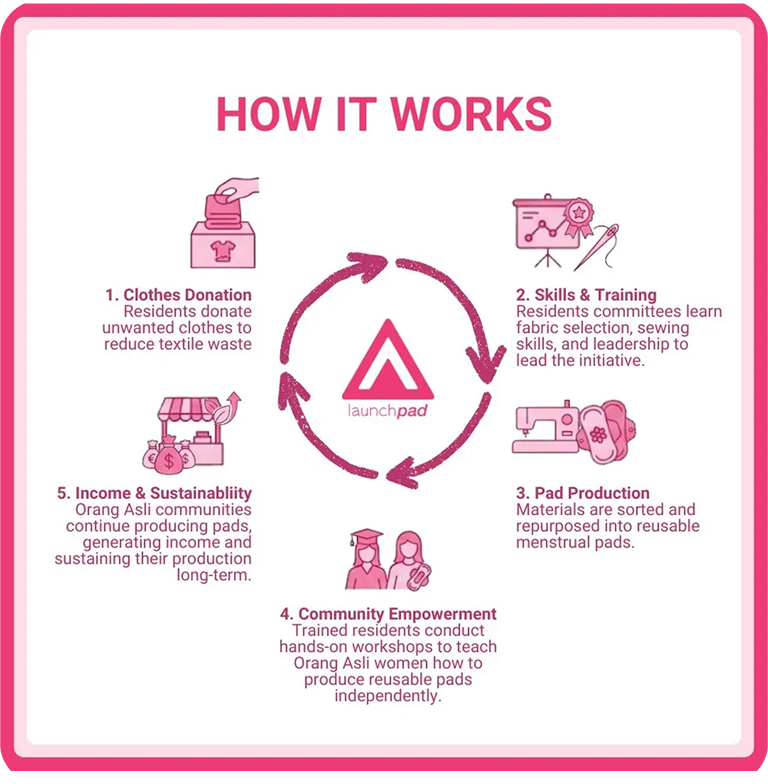
How It Works

Why it Matters?

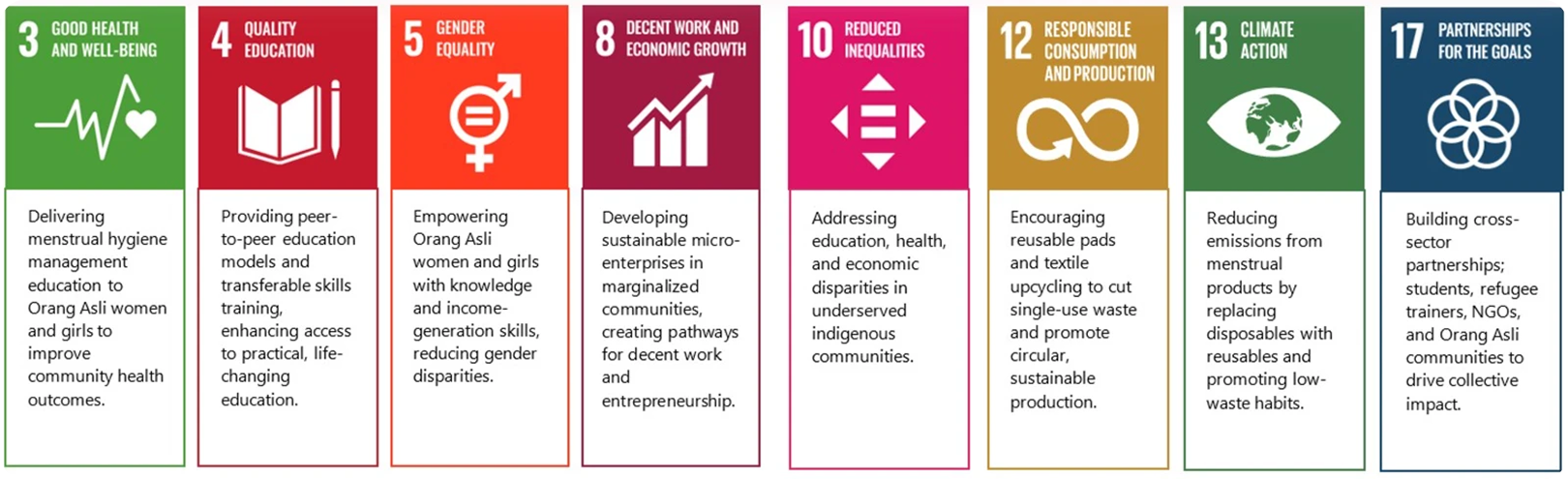
Social & Health Impact: Directly addresses SDG 3 (Good Health and Well-being) by tackling menstrual equity and providing essential health resources to Orang Asli women.
Environmental Impact: Directly addresses SDG 12 (Responsible Consumption and Production) by diverting textile waste from landfills and promoting a circular economy through upcycling.

Launchpad Journey

The first project in Malaysia to tackle period poverty among refugees

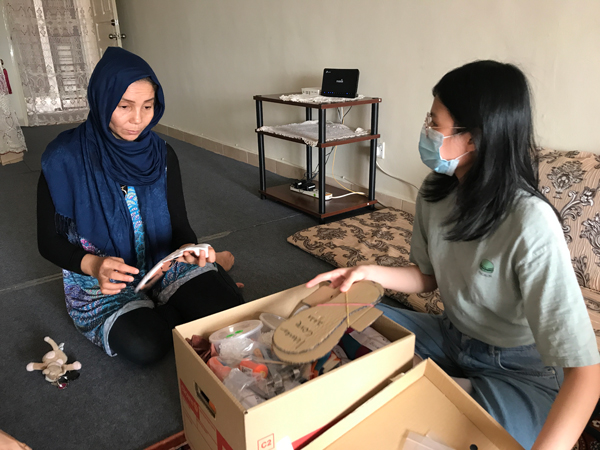
Two women sitting on the floor facing each other, one wearing a blue headscarf and the other wearing a face mask, with boxes of items between them.

2019: Project Launch & Pilot - Phase 1

LaunchPad was launched. Through research and collaboration with refugees, we were able to prototype and develop reusable menstrual pads. We created and continuously improve our workshop program to teach trainers and refugees how to make the reusable pads. With the help of volunteers, we were able to produce and donate 500 reusable pads to the community.
70
Refugees aided
2
Workshops conducted
500
Reusable pads donated
Learn More

2020: Printable Material - Phase 2

The pandemic caused a lockdown that presented challenges for our efforts to support the refugee community. To sustain our assistance to the refugee community, we created a multilingual printable tutorial that refugees could easily distribute. This tutorial enabled them to continue raising awareness about menstrual hygiene and taught them how to make their own reusable pads.
6
NGOs Collaborated
500
Reusable pads donated
Learn More
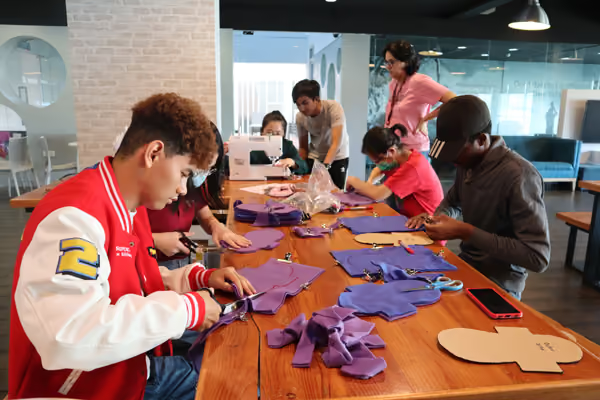
A group of young people sitting at a wooden table cutting purple fabric pieces using scissors, supervised by two adults in a modern room.
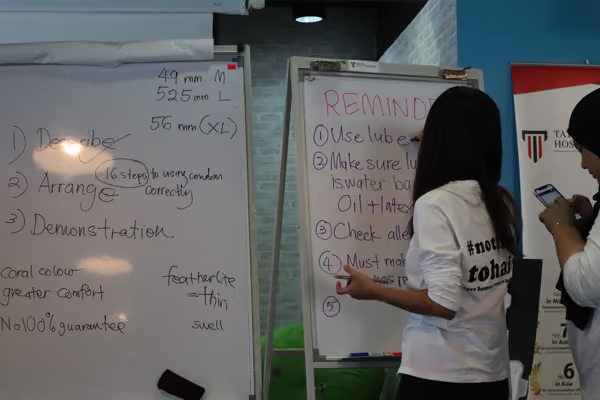
Two people standing next to whiteboards with handwritten notes about condom use and reminders in a classroom or workshop setting.

2021-2022: Digital Outreach to Empower Refugees - Phase 3

Phase 3 made significant strides towards establishing a self-sustaining ecosystem focused on menstrual hygiene and supporting refugee communities. These resources enabled anyone to start their own Launchpad program for their community. Our mission was to empower people to play an active role in addressing menstrual hygiene challenges.
60
Refugees trained as trainers
1000+
Refugees aided
1300
Reusable pads donated
Learn More

2023: Community Empowerment - Phase 4

The pandemic caused a lockdown that presented challenges for our efforts to support the refugee community. To sustain our assistance to the refugee community, we created a multilingual printable tutorial that refugees could easily distribute. This tutorial enabled them to continue raising awareness about menstrual hygiene and taught them how to make their own reusable pads.
Learn More
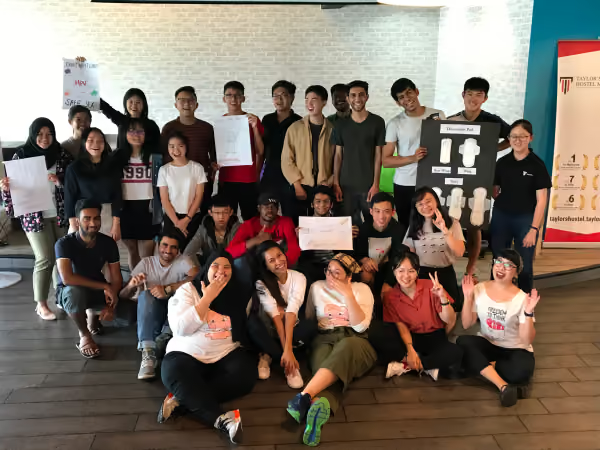
A diverse group of smiling young people posing indoors, some holding drawings and posters, in a casual meeting or workshop setting.
Two people standing next to whiteboards with handwritten notes about condom use and reminders in a classroom or workshop setting.

2024: Empowerment through Self-Sustainability - Phase 5

In 2024, the Launchpad project entered an innovative phase focusing on empowerment through self-sustainability, signalling an important point in our effort to assist refugee communities. Building on the foundation of community-driven projects, this phase focuses on reskilling refugees in fundamental business and entrepreneurial skills.
24
Refugees reskilled
1000
Cotton t-shirts donated for pad making
Learn More

2025: Expanding Impact to Indigenous Communities - Phase 6

Laid the groundwork for LaunchPad 2.0 through student training, community visits, and cultural understanding.

Began engagement with Orang Asli communities through early outreach, co-creation workshops, and skills preparation.

Students and refugees collaborate to understand community needs and prototype sustainable menstrual solutions.
Learn More
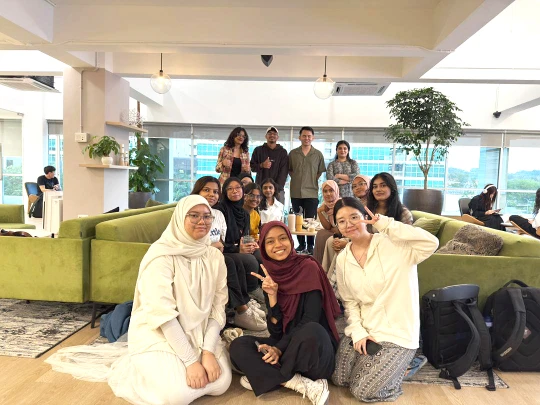
Group of diverse young adults sitting and standing in a bright, modern indoor lounge with green sofas, smiling and posing for a photo.
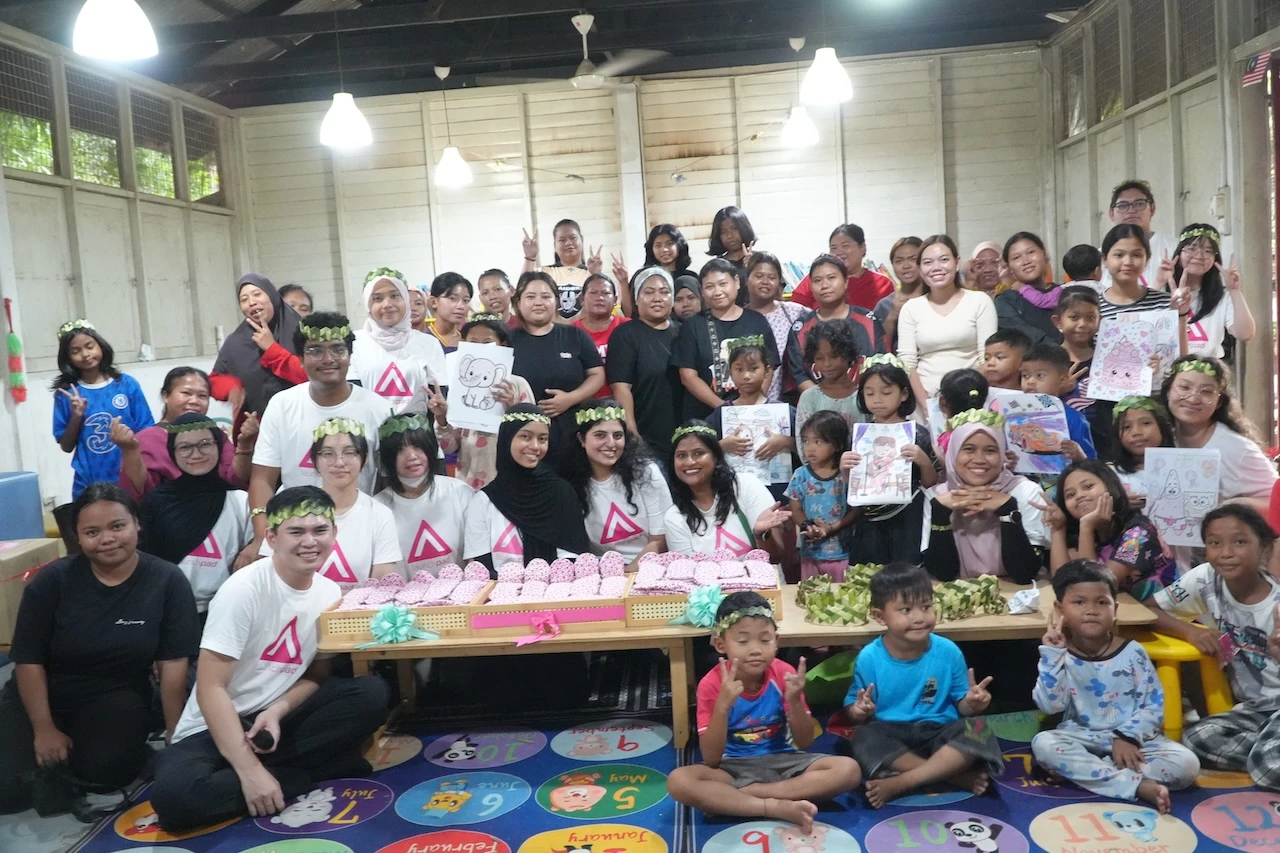
Large diverse group of children and adults posing indoors with drawings and decorated packages on tables.

2026: Mobilizing for Impact

This year, LaunchPad shifted to a student-led trainer model, mobilizing our committees to lead skill-sharing workshops directly with Orang Asli mothers.
5
Workshops conducted
15
Students trained as lead trainers
3
nNew sizes developed to improve inclusivity and community fit
Learn More

Environmental

Impact

5,300

Reusable Pads Produced & Distributed

1,590

Refugees & Indigenous Communities Supported

422

Students & Residents Empowered

Let's support underprivileged communities by empowering them and encouraging more people to help through awareness-raising efforts.

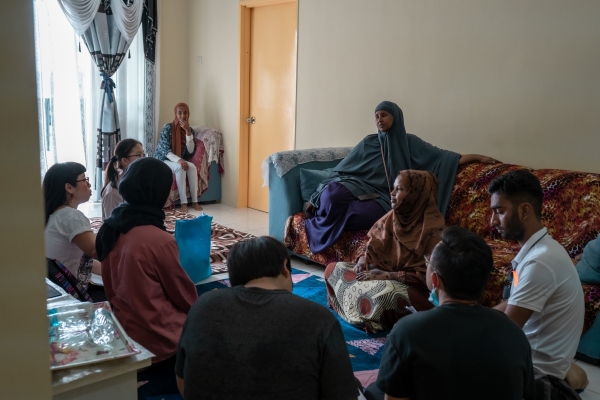
A diverse group of people sitting on the floor and couches in a living room, engaged in a conversation or meeting.
Comfortable, clean & saves money.
- Asha
It's good. Much more comfortable, I will try using it next period.
- Fadumo
It will be much better than the usual clothes that I usually use.
- Fardus
UNHCR emblem with blue globe and laurel branches, with the text 'UNHCR The UN Refugee Agency'.
In addition to providing essential knowledge and tools for managing menstrual health, Launchpad also equips refugee women with the skills to produce reusable sanitary pads, creating income-generating opportunities that promote economic independence.
Kloth brand logo in stylized lowercase letters with a pink hand symbol integrated into the letter 'k'.
"Partnering with Taylor's Residence on the LaunchPad project enables us to extend our mission by providing 600 pieces of cotton for reusable sanitary pads, addressing menstrual hygiene among refugee women and girls, and reinforcing our commitment to sustainable practices.

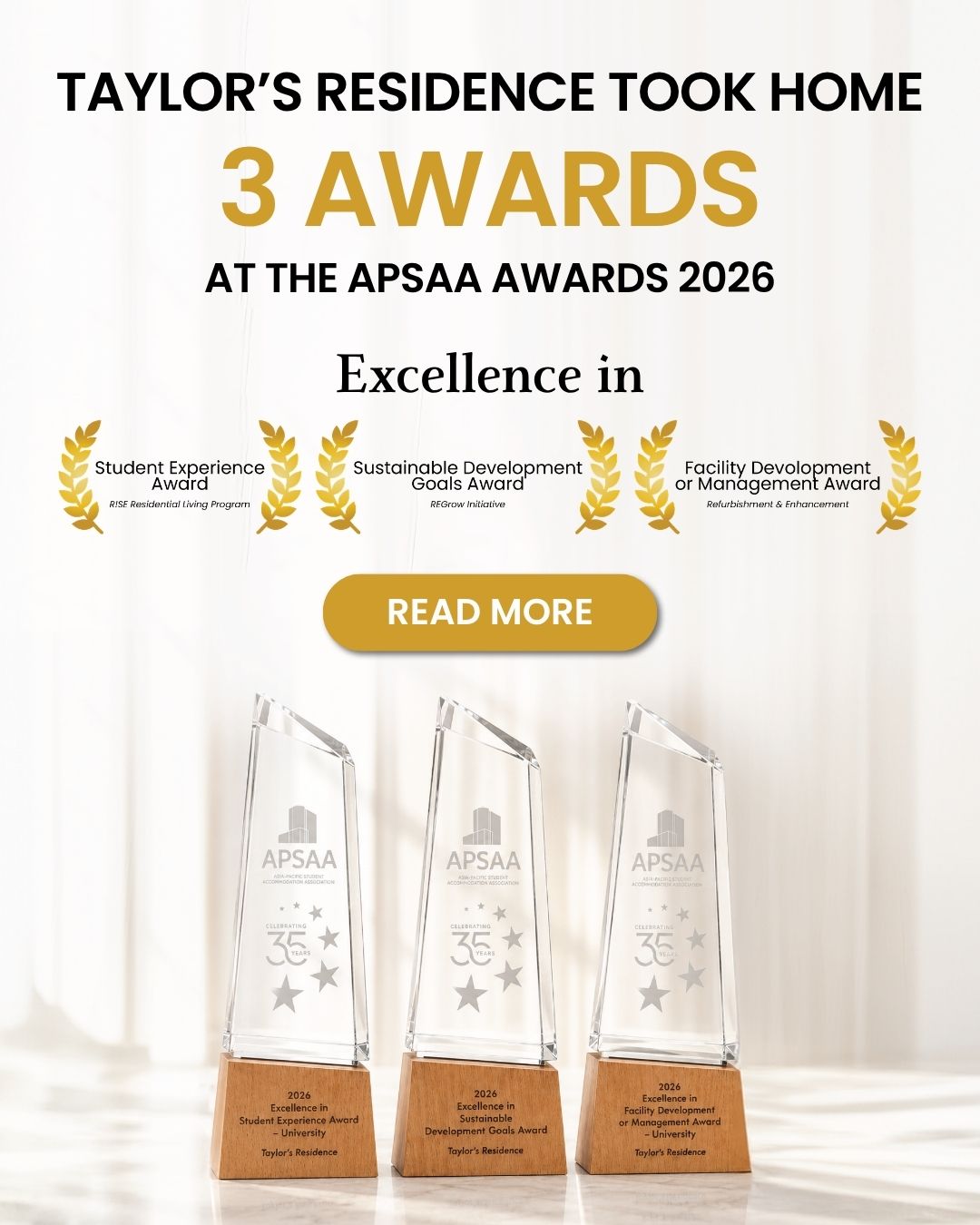
Awards & Recognition

Taylor’s Residence has transformed into an award-winning community builder, with a focus on imparting crucial life skills to its residents.
Marquee ImageMarquee ImageMarquee ImageMarquee ImageMarquee ImageMarquee ImageMarquee ImageMarquee ImageMarquee ImageMarquee ImageMarquee ImageMarquee ImageMarquee ImageMarquee Image

Book Your Accommodation Today!

1

Personal Details & Confirmation

Submit your contact details.

2

Room & Stay Details

Submit your details & room preference.

Book Your Accommodation Today!

Black circle with a white check mark inside.

Personal Details & Confirmation

Submit your contact details.

2

Room & Stay Details

Submit your details & room preference.

Thank you getting in touch! We will be in touch with you soon.
Oops! Something went wrong while submitting the form.
Three students standing outdoors on a campus pathway, holding notebooks and backpacks, engaged in conversation.

X

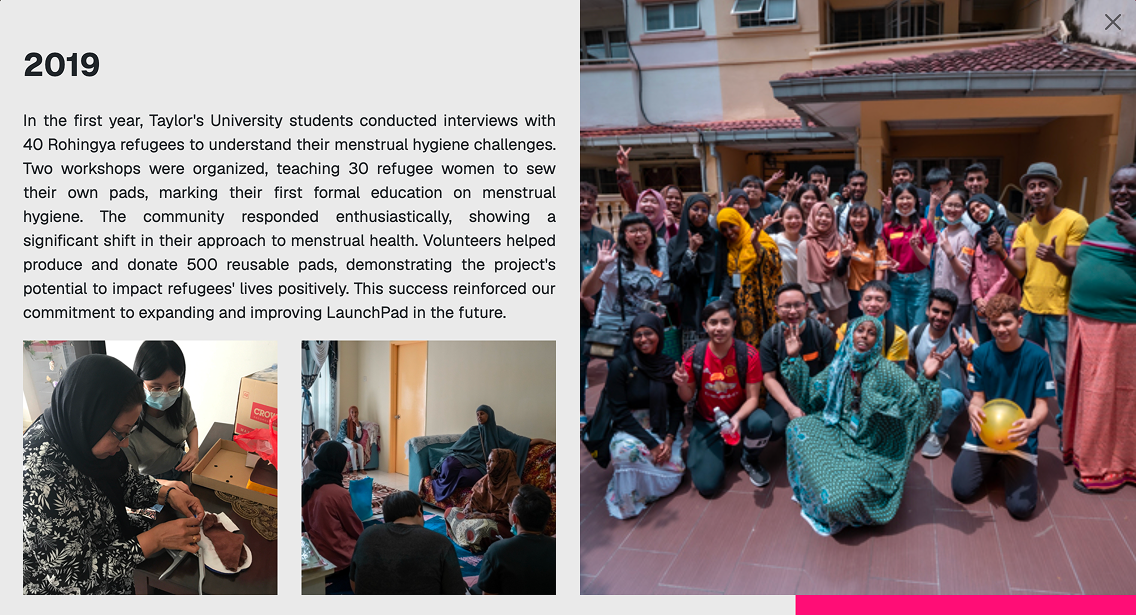
2019

In the first year, Taylor's University students conducted interviews with 40 Rohingya refugees to understand their menstrual hygiene challenges. Two workshops were organized, teaching 30 refugee women to sew their own pads, marking their first formal education on menstrual hygiene. The community responded enthusiastically, showing a significant shift in their approach to menstrual health. Volunteers helped produce and donate 500 reusable pads, demonstrating the project's potential to impact refugees' lives positively. This success reinforced our commitment to expanding and improving LaunchPad in the future.
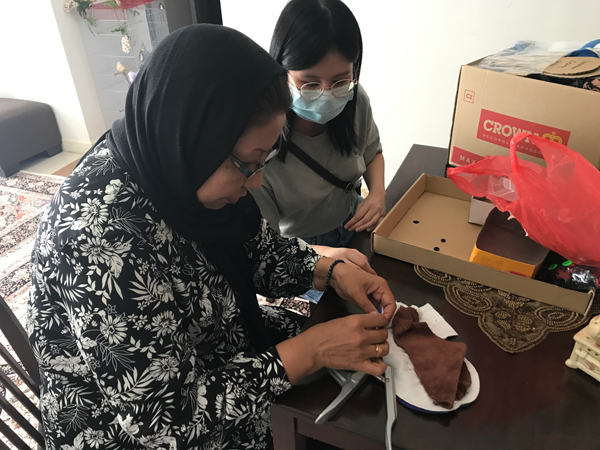
Woman in a black hijab using a tool on fabric as another woman wearing glasses and a mask watches, seated at a table with boxes and a red plastic bag.A diverse group of people sitting on the floor and couches in a living room, engaged in a conversation or meeting.
A diverse group of young adults posing and smiling together in an outdoor courtyard.

X

2021 - 2022

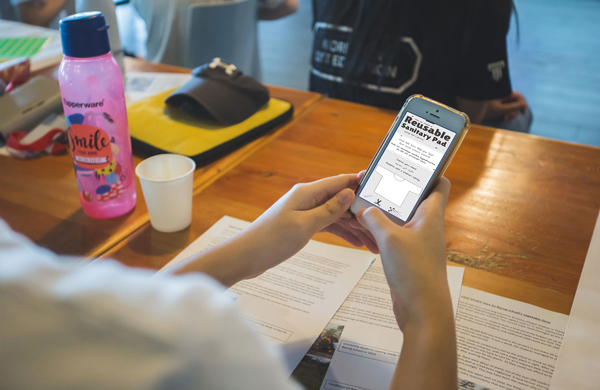
Our online pad-making tutorials, available in seven languages, empowered over 1000 refugees to craft reusable pads, enhancing their health and well-being. Additionally, we donated 1300 reusable pads to provide immediate relief. These efforts reshaped community perceptions about menstrual health and provided essential education on reproductive health.

Phase 3's success highlighted the LaunchPad team's resilience and adaptability in fostering sustainable solutions and empowering refugee communities. By bridging technological innovation with community needs, the project continues to make a tangible difference in the lives of refugees, promoting dignity, health, and self-reliance.
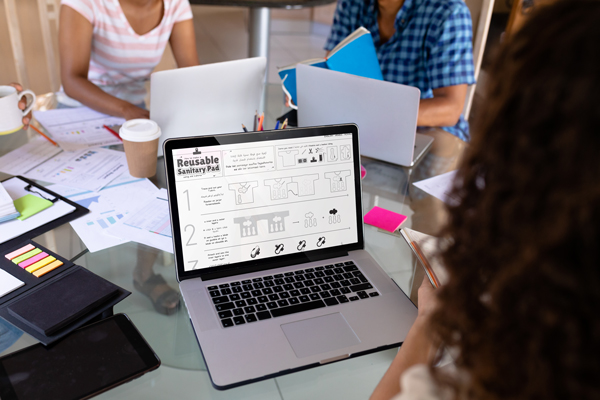
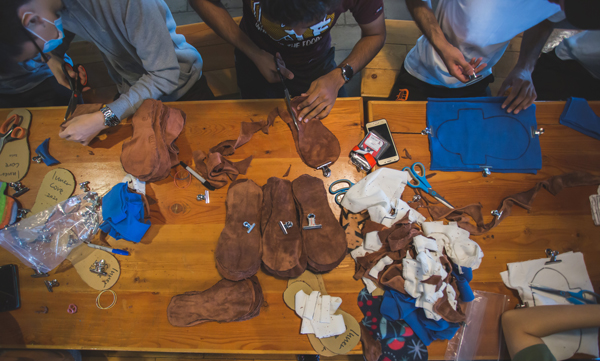
People sitting around a glass table with laptops, one laptop screen displaying a reusable sanitary pad tutorial.People cutting and assembling pieces of brown and blue fabric for a craft project on a wooden table.
Person holding a smartphone displaying a Reusable Sanitary Pad webpage, sitting at a table with documents, a pink water bottle, and a white cup.

X

2024

This year, we expanded our collaborations; at the core of our approach is a strong partnership with Kloth Care, a women-led social organization that specializes in textile recycling, and the United Nations High Commissioner for Refugees (UNHCR). Kloth Care, with its global impact, provides essential cloth materials, while UNHCR facilitates training and integrates refugees into our program, significantly enhancing our reach and impact.
Our goal is to build entrepreneurial mindsets in refugees and provide them with the skills necessary to produce revenue through long-term business initiatives.
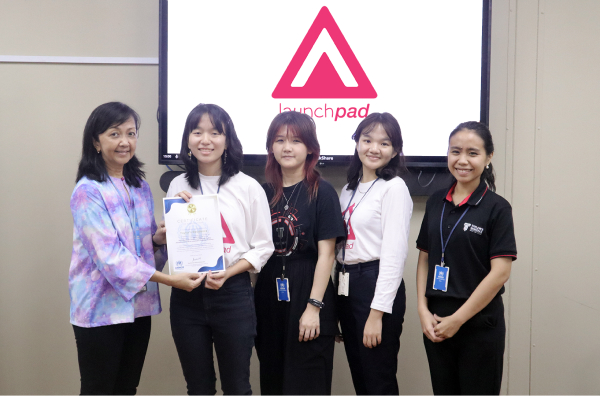
Five women standing indoors, two holding a certificate, with a screen behind displaying the Launchpad logo.

X

Our 2026 journey was defined by a three-step mobilization strategy designed to ensure the sustainability of the LaunchPad ecosystem

The Student Catalyst: We empowered 15 student trainers with deep technical and cultural competency. Rather than staff-led delivery, these students became the face of the project, fostering a peer-to-peer learning environment with the Orang Asli mothers.
Knowledge Impartation: Through 5 intensive workshops, these student trainers successfully taught the OA mothers the intricacies of pad-making, transitioning them from recipients of aid to producers of their own hygiene solutions. The Feedback Loop: To validate our progress, we initiated a cross-community trial. By collecting data from students, staff, and OA mothers, we identifed the need for size expansion, ensuring our 2026 output was a direct result of collaborative co-creation.
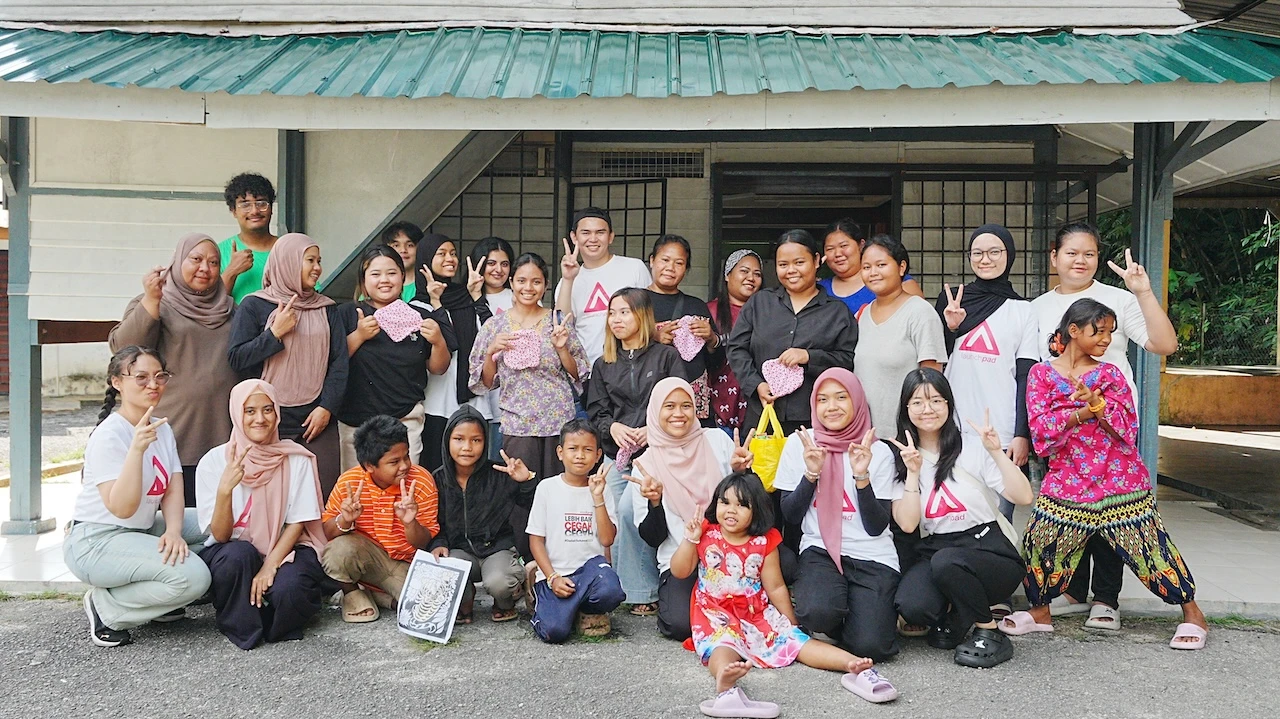
Group of diverse people, including women and children, posing outside a building under a green roof, many smiling and making peace signs.

X

Call-to-Action Day 2025

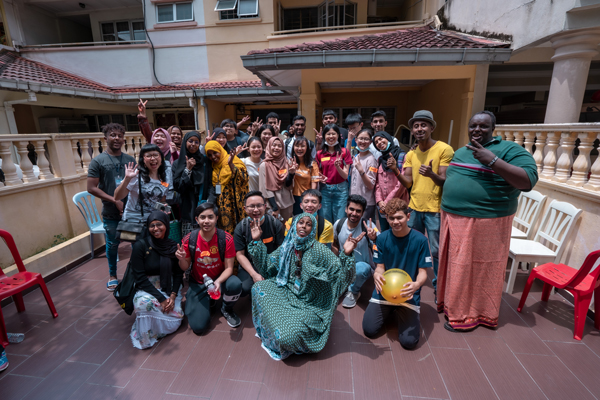
On 5 July 2025, LaunchPad 2.0 officially launched with a powerful Call-to-Action Day, where students gathered to explore period poverty, safe-sex education, and join the movement as volunteers. This event marked the first step of Phase 6, setting the foundation for the impact journey ahead.

X

2023

Collaboration with NGOs and organizations strengthened our impact, leveraging expertise and resources to scale initiatives. This approach addressed immediate needs and laid the groundwork for sustainable development and lasting empowerment. As refugees gained proficiency in managing menstrual hygiene, they improved health outcomes and acquired valuable skills, enhancing their resilience and self-reliance. The 2023 phase of LaunchPad highlighted the transformative potential of community-driven initiatives, emphasizing education, accessibility, and collaboration to empower refugee communities globally.
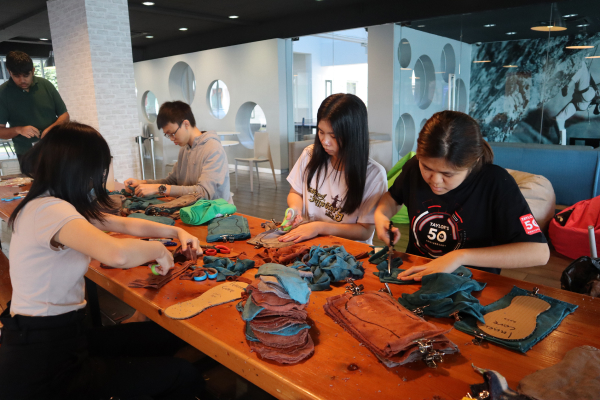
Four people sitting at a table cutting fabric pieces for crafts or garment making in a modern, well-lit room.

X

2020

The COVID-19 pandemic and lockdowns in 2020 challenged LaunchPad's in-person workshops. In response, the team developed a multilingual printable tutorial to continue teaching menstrual hygiene and pad-making.Taylor's Residence students, collaborating with six nonprofits, researched effective support methods, resulting in a widely distributed seven-language tutorial and starter kit. Additionally, students handmade and donated 500 emergency reusable pads to refugees. These efforts ensured LaunchPad's mission continued despite the pandemic. The successful adaptation highlighted the team's resilience, commitment, and innovative approach to supporting vulnerable populations during crisis.
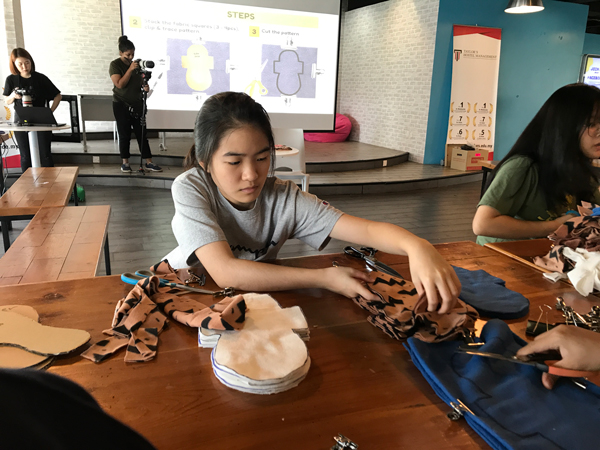
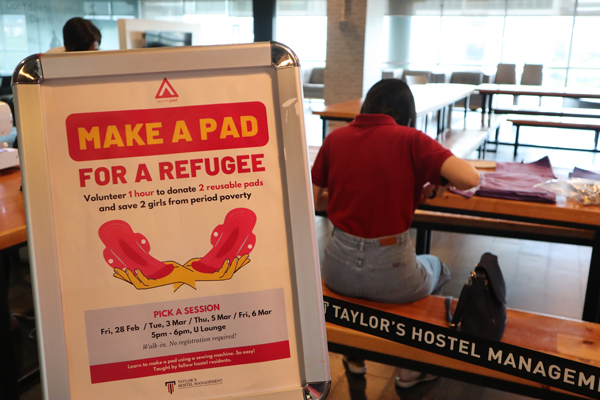
Young woman working on fabric pieces at a wooden table in a workshop with others and a projection showing sewing steps in the background.Sign encouraging volunteering to make reusable pads for refugees, promoting help for girls in period poverty, placed next to a woman sitting at a table.
Instructions for using a reusable sanitary pad showing steps: 1. Wash hands, fold pad, and wear panties. 2. Pin pad on underwear with the button, adjust fit. 3. Use for up to 6 hours, then change. 4. Unpin and roll used pad, secure with button. 5. Soak used pads in water with soap or detergent. 6. Wash thoroughly with soap, rinse, and squeeze out water. 7. Hang pad to dry in sunlight, then fold and store for reuse.